The need
Invisible, but not powerless
The families PRASM supports fled a war that took their homes. In Thailand they are safe from the fighting. But without papers, they fall through every system built to help.
Fleeing war
These families come from Myanmar, where their homes were taken over by the army. Some arrive the day they cross the border, carrying what they could hold.
Among them are wounded ex-combatants (people who have lost eyes, fingers, limbs) and children who have lost parents. The cost of the conflict is written on the village itself.
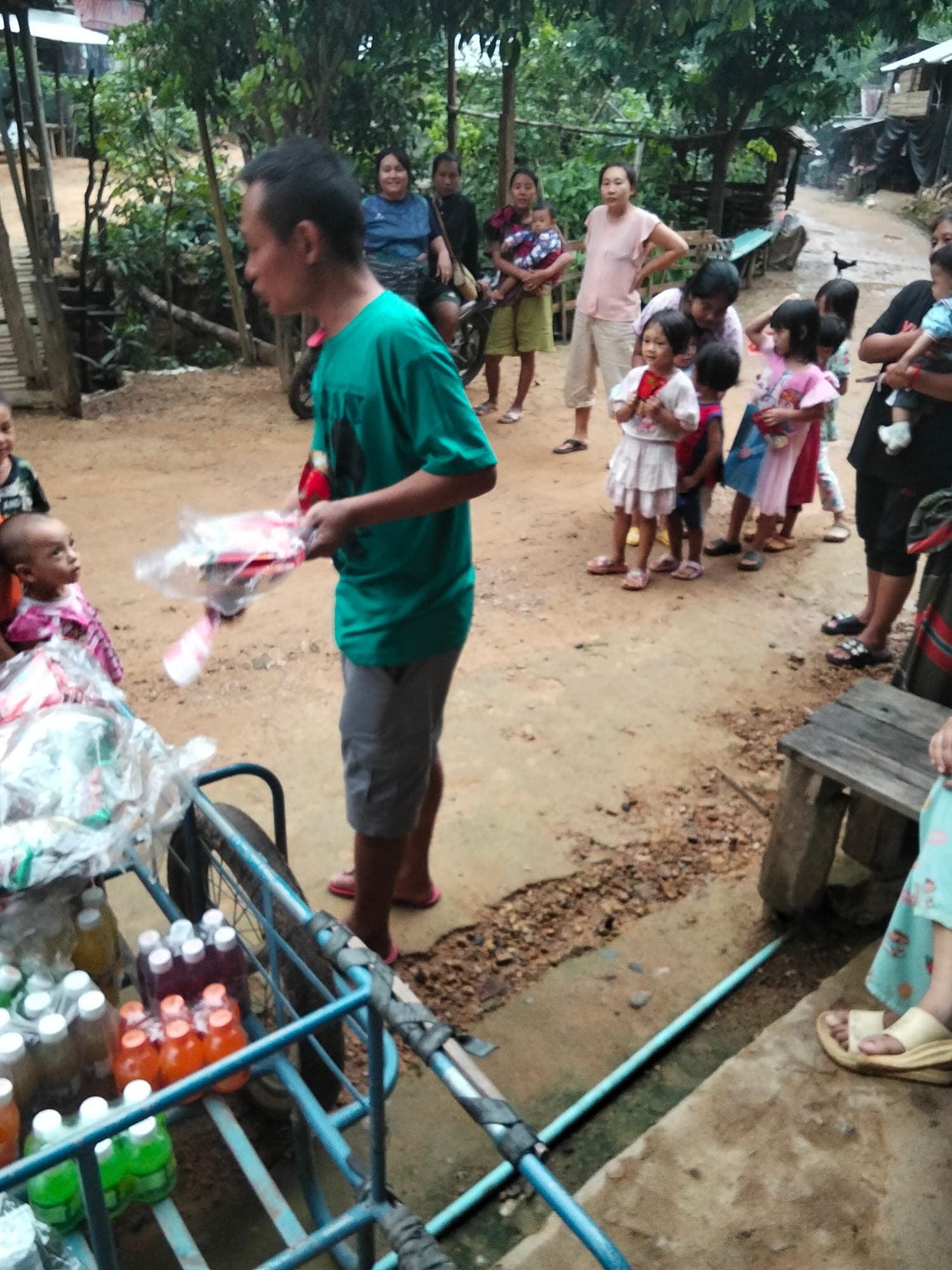
Living as “ghosts”
Born or arriving outside any registry, many here have no Thai ID, and often no identity document at all. Children, especially, are effectively invisible: no birth record, no proof they exist.
Without identity, ordinary life becomes a locked door. You cannot easily enroll in school, prove who you are, or claim the protections that documentation quietly provides.
The cost
What that costs them
No school
Without Thai ID, children are barred from public school. The camp school needs paperwork and travel many families can't manage.
Healthcare they can't afford
Hospitals charge refugees the full foreigner rate (the same as a tourist), with no insurance to soften it. A single visit can be impossible.
Identity they can't prove
At a hospital or checkpoint, there's no document to show. Without a record of having existed, even basic help is hard to unlock.
And yet
This is not a story of helplessness
The village is off-grid and largely self-sufficient: solar pumps the water, gardens and animals provide food, and neighbors hold one another up through deep tribal solidarity.
What's missing isn't will or dignity. It's a few things outsiders can provide: a way to be seen, a way to be treated when sick, and a way for children to learn. That's where PRASM comes in.
Help open a locked door
Care, schooling, and a way to be seen: small things that change everything.